
Westmoreland County Probate Records Office
Probate in Westmoreland County is centered in the Register of Wills and Clerk of the Orphans' Court. The Register of Wills side probates wills, decides whether a will is valid for probate, grants letters testamentary or letters of administration, keeps estate records, collects inheritance tax as agent for Pennsylvania, and maintains long-running genealogical files. The Clerk of the Orphans' Court side handles marriage licenses, guardianships, adoptions, termination of parental rights, estate litigation, and related Orphans' Court filings.
The county's Register of Wills page is the local source for probate and Orphans' Court duties.
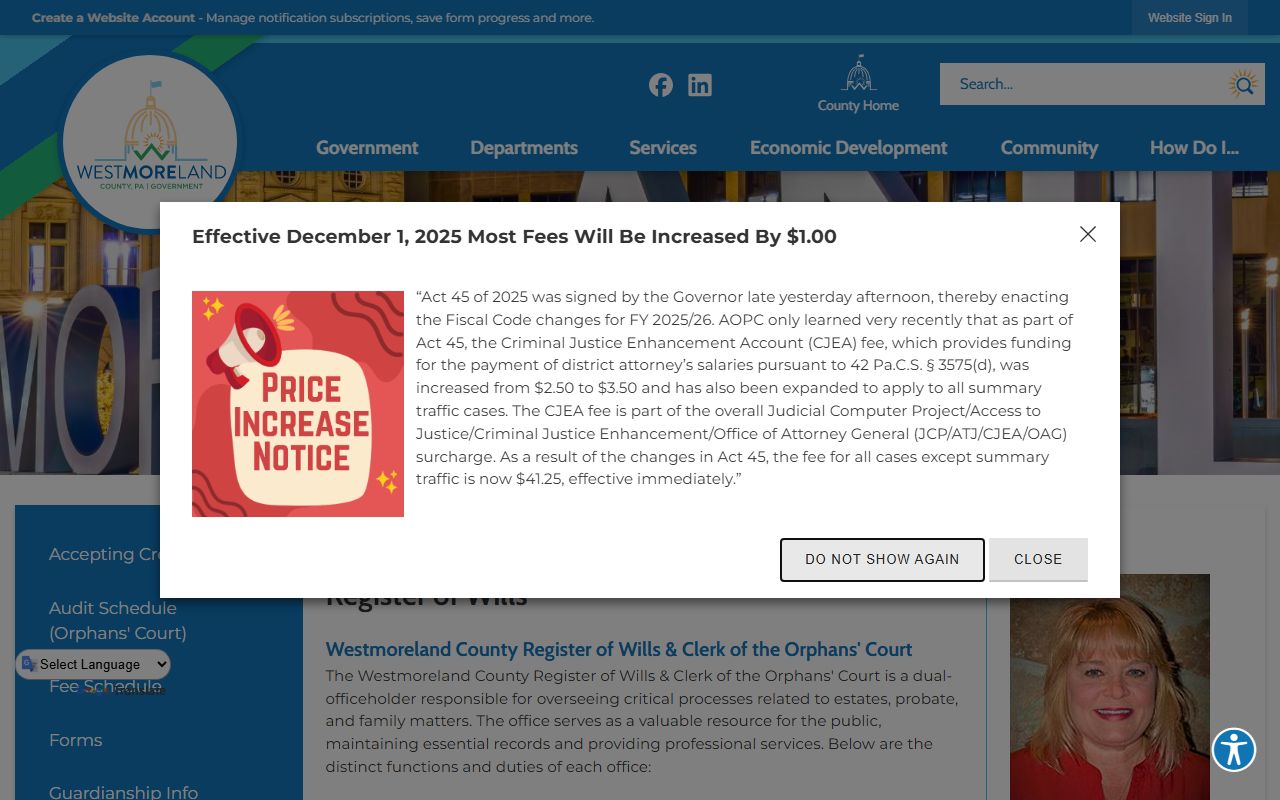
That office distinction is important because Westmoreland County probate records, marriage records, guardianship filings, and adoption records may all sit in the same dual office, while civil divorce records sit with the Prothonotary.
Register of Wills and Clerk of the Orphans' Court
2 N Main Street, Suite 301
Greensburg, PA 15601
724-830-3177
Monday-Friday, 8:30 a.m.-4 p.m.
Westmoreland County Probate Terms
Probate records use short legal terms that can hide the practical point of a filing. The terms below match the estate and Orphans' Court work described in the county research. A person searching older Westmoreland County probate records may see these words in docket books, online indexes, letters, inventories, accounts, and court orders.
- Testator
- The person who made a will before death.
- Executor
- The person named in a will to carry out estate duties after probate.
- Intestate
- A death without a valid will, often leading to letters of administration.
- Letters testamentary
- A document showing an executor has authority to act for the estate.
- Guardianship
- An Orphans' Court matter involving court authority for a minor or incapacitated person.
- Conservatorship
- A related protective concept often used for control of property or financial affairs, though Pennsylvania filings may use guardianship terms.
Search Westmoreland County Orphans' Court
The county record-information page says estate records are available from 1773 to the present, and Orphans' Court records are available from 1773 to the present. The Register page also mentions Orphans' Court records from 1750 to present, so researchers working at the earliest edge should confirm the specific record series with the office. Most Register records from 1988 to present are online, while older records must be viewed in the office.
The Register record information page is the source for probate date ranges and search requirements.
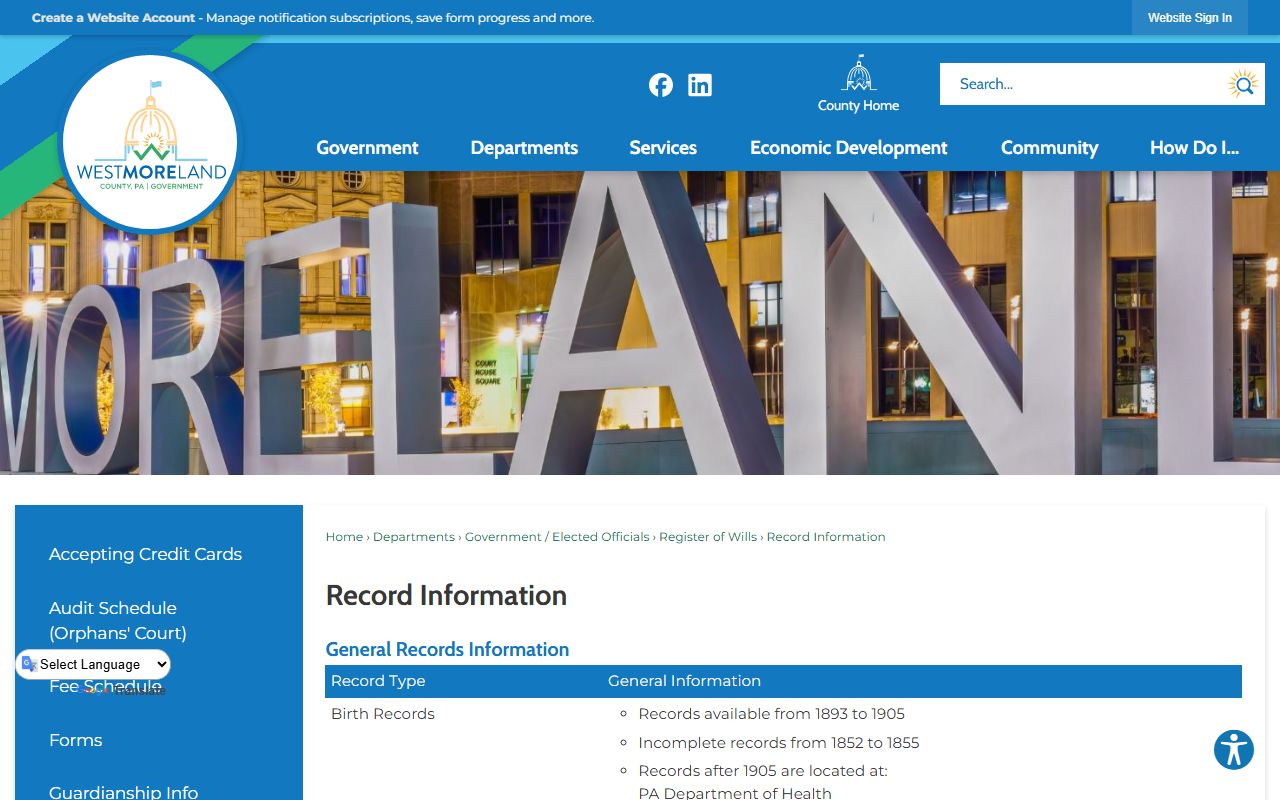
Its date-range details make the difference between an online lookup and an in-office historical record search.
The Westmoreland County research also notes Inheritance Tax Dockets from 1915 to 1919. That kind of narrow record series can matter for genealogy, title work, and estate-history questions because it may point to estate activity even when a modern online search does not return a scanned file. For eighteenth-century and early twentieth-century work, ask the Register office which record book, docket, or index series applies before assuming the record is absent.
- Identify whether the request concerns an estate, will, letters, guardianship, adoption, or Orphans' Court case.
- Search modern Register records first when the record is from 1988 or later.
- Use a first and last name for all record searches, and add domicile when known.
- For older estate or Orphans' Court records, plan an office search rather than relying on the web index.
- Ask the Register office for a certified copy, short certificate, or exemplified record if the document will be used for a legal or financial purpose.
Westmoreland County Probate Fees
Probate filing fees depend on the filing type and, for grants of letters and accounts, on the value range of the estate. The confirmed local fee schedule also lists copy fees, certification fees, and Orphans' Court items. Use the county schedule before filing because probate costs can change when a petition, account, inventory, certificate, or court hearing is added.
The county Register and Orphans' Court fee schedule gives the probate and copy charges used below. It should be checked again before filing because a single estate may require more than one charge, such as letters, inventory, short certificates, copies, and later account filings.
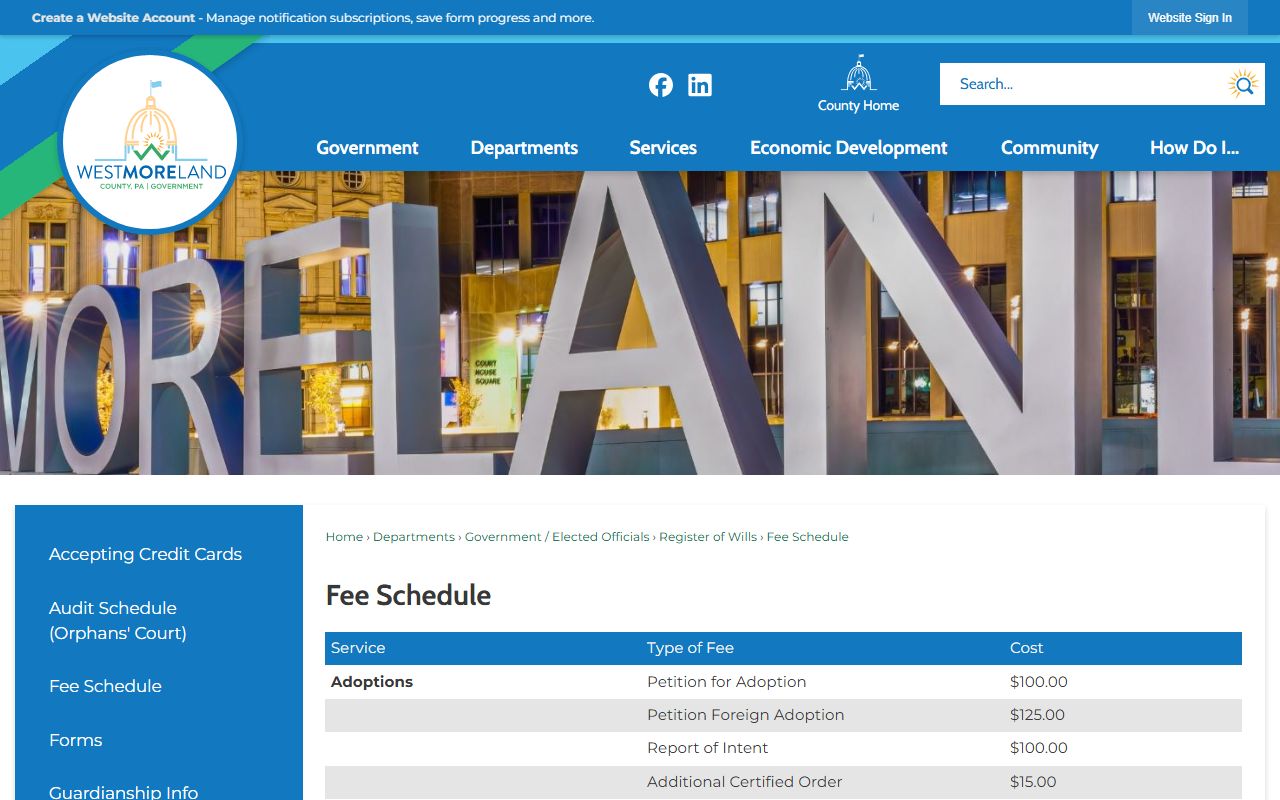
The fee schedule is especially useful for estates because the grant-of-letters fee changes by estate value.
| Filing or service | Fee |
|---|---|
| Probate of wills without letters | $50 |
| Renunciation or declination of letters | $15 |
| Estate short certificate | $5 |
| Inventory, estate, amended, or supplemental | $25 |
| Family exemption | $15 |
| Register's hearing | $100 |
| Caveat | $35 |
| Small estate petition | $60 |
| Grant letters under $5,000 | $50 |
| Grant letters $5,001-$10,000 | $100 |
| Grant letters $10,001-$25,000 | $125 |
| Grant letters $25,001-$50,000 | $150 |
| Grant letters $50,001-$100,000 | $250 |
| Grant letters $100,001-$200,000 | $350 |
| Photocopies | $0.50 per page |
| Certification of local records | $15 |
What Westmoreland County Probate Records Show
Westmoreland County probate records may include the will, petition for probate, letters testamentary, letters of administration, short certificates, estate inventory, inheritance tax papers, account filings, court orders, caveats, renunciations, family exemption papers, and estate litigation papers. Orphans' Court records may also include guardianship, adoption, termination-of-parental-rights, and contested estate filings. The office also keeps genealogical records, which matters because estate records in Westmoreland County reach back to the eighteenth century.
| Record type | What it may show |
|---|---|
| Will | Testator name, beneficiaries, executor, signatures, witnesses, and probate acceptance. |
| Letters | Authority for an executor or administrator to act for the estate. |
| Inventory | Estate assets reported to the Register or court. |
| Account | Receipts, expenses, distributions, and balance information for an estate. |
| Guardianship | Court authority and reports involving a minor or incapacitated person. |
| Adoption | Restricted Orphans' Court material subject to legal access limits. |
File Westmoreland County Estate Papers
A local estate filing starts by deciding whether there is a will and whether letters are needed. The Register of Wills can confirm appointment needs, local forms, probate scheduling, and fees, but the office warns that it cannot provide legal advice. Westmoreland County offers virtual services to be sworn in as representative of an estate. The research file states that the virtual fee is $100 and that the service is by appointment on weekdays.
Small estates, contested estates, and guardianships can follow different paths. A short certificate may be enough for some transactions after letters issue, while a dispute over a will, account, or fiduciary duty may need Orphans' Court review.
- Determine whether the decedent left a will and whether estate authority is needed.
- Contact the Register of Wills for forms, appointment rules, fees, and any virtual oath option.
- File the original will and probate petition or administration request.
- Receive letters testamentary or letters of administration if the filing is accepted.
- File estate inventory and inheritance tax materials as required.
- Use the Orphans' Court for contested matters, guardianships, adoptions, and supervised estate disputes.
Note: Staff can explain local filing mechanics, but legal strategy for an estate, guardianship, or contested matter requires a lawyer.
Restricted Westmoreland County Probate Records
Estate records are generally public, but probate-related files are not all open in the same way. Adoption records are restricted. Guardianship files may include medical information, minor information, or sensitive financial details. Termination-of-parental-rights records and some Orphans' Court records may be limited by statute or court order. A public index entry does not guarantee that every paper in the file can be viewed remotely or copied by any requester.
Guardianship and adoption limits also affect how copy requests should be worded. A requester may be able to confirm that a file exists without receiving the full contents. Estate files are usually more open, but account exhibits, tax material, or personal identifiers can still create access questions. When the purpose is banking, real estate, estate administration, or court filing, ask for the exact certified document needed, such as letters, a short certificate, an order, or a certified copy of the will.
The Register public record search page is the county's hub for online searches.
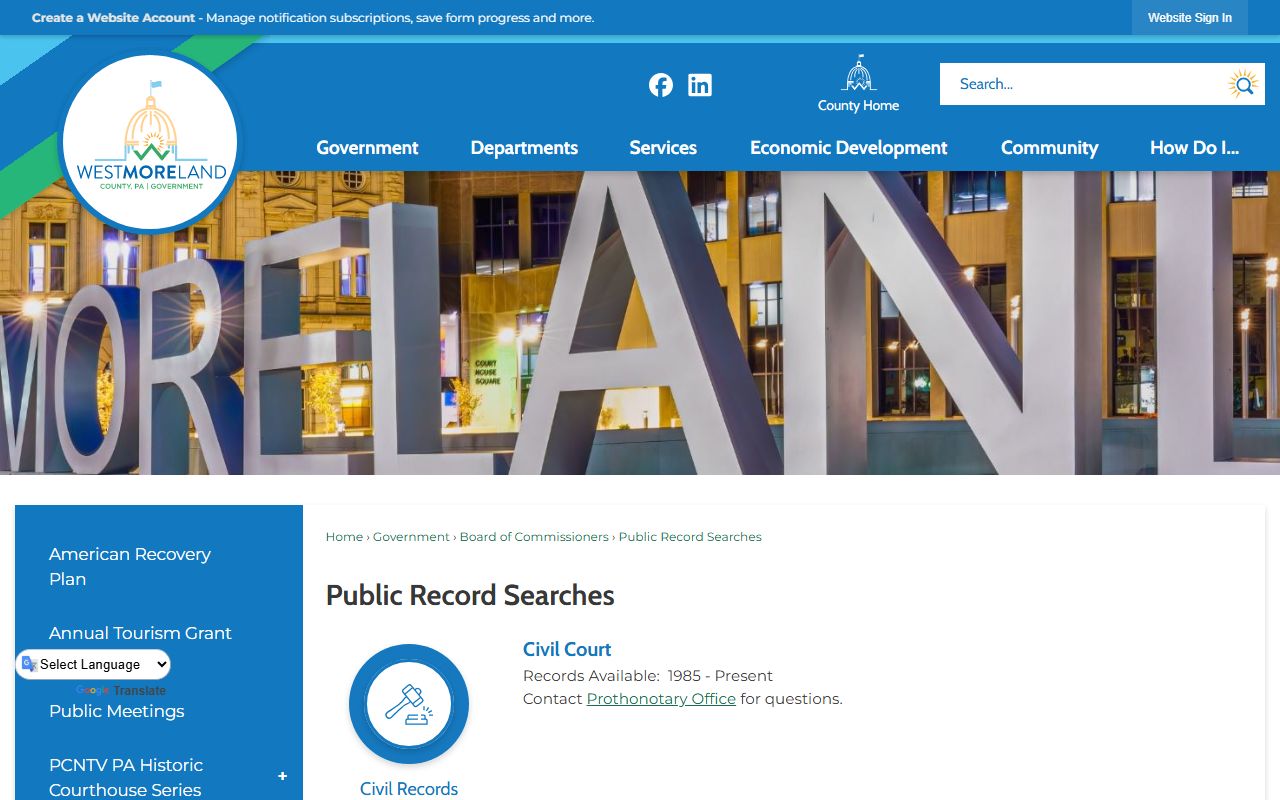
Use the search hub for modern records, then contact the Register office for older records, certified copies, or access questions involving restricted Orphans' Court files.
The Register office expressly warns that it cannot provide legal advice. Staff can explain filing mechanics, office fees, record locations, and copy procedures, but they cannot decide whether to open an estate, how to distribute assets, how to object to a will, or how to handle a guardianship dispute. Those questions belong with counsel or the court process.
For old estates, bring variant spellings and approximate dates. Westmoreland County's long record span means older entries may use historical names, handwritten indexes, or book references.